

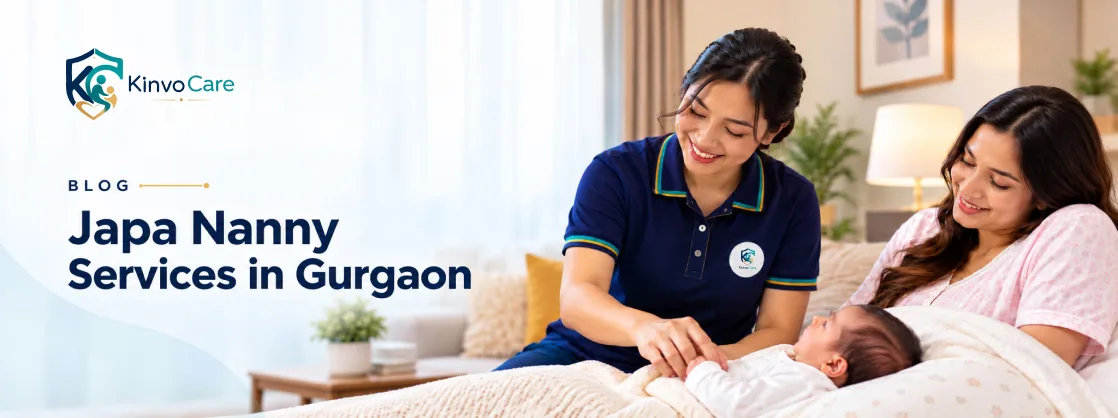
Welcoming a newborn into the family is a special experience, but the first few weeks after delivery can also be physically and emotionally demanding. A newborn needs frequent feeding, diaper changes, gentle handling and constant attention. At the same time, the mother needs adequate rest and support to recover from childbirth.
For families in Gurgaon, Delhi and NCR, managing newborn care without additional help can be challenging. Working parents, nuclear families and limited support from relatives often make the post-delivery period more demanding.
This is where Japa nanny services can make a difference.
A Japa nanny is an experienced newborn caregiver who assists families with baby handling, feeding routines, hygiene, diaper changing, sleep routines and basic non-medical support for the mother during the postnatal period.
However, hiring someone to care for a newborn requires careful consideration. Parents need more than an available caregiver. They need someone whose identity has been checked, whose experience has been reviewed and who understands the importance of newborn safety and hygiene.
At KinvoCare, we help families find verified and trained Japa nannies in Gurgaon, Delhi and NCR. Our approach goes beyond matching caregiver profiles by focusing on background verification, behavioural screening, training support and assistance after placement.
This guide explains what a Japa nanny does, when families may need one, how to choose the right caregiver and what to check before hiring Japa nanny services in Gurgaon.
What Is a Japa Nanny?
A Japa nanny is a caregiver who provides non-medical assistance to newborn babies and mothers during the period following childbirth.
In many Indian families, the term Japa refers to the traditional postnatal care period, commonly associated with the first 40 days after delivery. During this time, the mother focuses on recovery while the newborn adjusts to feeding, sleeping and daily care routines.
Traditionally, mothers and newborns received help from experienced family members. Today, many families choose professional Japa nanny services when relatives cannot provide regular assistance.
A Japa nanny generally supports two important areas:
Newborn baby care: Assisting with feeding, burping, diaper changing, baby hygiene, bathing preparation, soothing and maintaining everyday care routines.
Postnatal mother support: Reducing the mother's daily childcare workload, helping organise baby essentials and assisting with agreed non-medical activities so the mother has more opportunities to rest.
Unlike a general household helper, a Japa nanny's primary responsibility is newborn care and related support.
The exact duties should be agreed upon before hiring, based on the caregiver's experience and the family's requirements.
Why Do Families Need Japa Nanny Services After Delivery?
The arrival of a newborn changes a family's daily routine almost immediately.
Babies need frequent attention throughout the day and night. Parents may experience interrupted sleep while learning to understand feeding cues, crying patterns and hygiene requirements.
A Japa nanny provides practical assistance during this transition.
1. Support During Post-Delivery Recovery
Every mother's recovery after childbirth is different. Some may need additional rest after a caesarean delivery, while others may experience fatigue or physical discomfort following a vaginal delivery.
A Japa nanny can assist with everyday newborn care responsibilities so the mother does not have to manage every task independently.
For example, the caregiver may help organise feeding essentials, change diapers, prepare baby clothing and maintain the baby's immediate care environment.
Medical recovery, wound care, medication and other clinical matters must remain under the supervision of qualified healthcare professionals.
2. Help With Frequent Newborn Routines
Newborn babies do not follow the same predictable schedule as older children.
They may need feeding, burping, cleaning or comforting at different intervals throughout the day.
An experienced Japa nanny can help parents manage these repeated tasks while following the baby's care instructions.
This additional assistance can make daily routines more manageable, particularly during the first few weeks.
3. Assistance for First-Time Parents
For first-time parents, newborn care often involves learning several unfamiliar responsibilities.
Parents may have questions about holding their baby safely, changing diapers, bathing preparation, burping and maintaining hygiene.
A Japa nanny with relevant newborn-care experience can provide practical assistance while parents develop confidence in their own childcare routines.
The caregiver should follow parental instructions and refer medical questions to the appropriate healthcare professional.
4. Support for Working and Nuclear Families
Many families in Gurgaon live in nuclear households where grandparents or relatives may not be available for extended periods.
With demanding professional schedules and household responsibilities, managing newborn care without additional support may be difficult.
Hiring a Japa nanny can provide an additional caregiver during agreed working hours.
5. Help During the Traditional First 40 Days
Some families prefer dedicated newborn support during the first 40 days after delivery.
Others may need assistance for a longer period depending on the mother's recovery, the baby's requirements and the availability of family support.
A Japa nanny can assist with agreed daily care routines during this period.
The duration should be selected according to the family's needs rather than treated as a fixed medical requirement.
What Does a Japa Nanny Do? Key Responsibilities Explained
The responsibilities of a Japa nanny may differ between families. Some require newborn-focused assistance, while others may also need basic mother-care support.
Before hiring, parents should discuss which tasks the caregiver can confidently and safely perform.
1. Newborn Handling and General Care
Newborn babies require gentle handling because their neck muscles are not fully developed.
A caregiver should understand how to support the baby's head and neck, lift the infant safely and hold the baby in appropriate positions.
Japa nanny responsibilities may include:
-
Helping parents handle and carry the newborn safely.
-
Changing the baby's clothing.
-
Assisting with diaper changes.
-
Soothing and comforting the baby.
-
Keeping baby-care essentials organised.
-
Supporting the baby's daily routine.
-
Informing parents about unusual changes or concerns.
Parents should check whether the nanny has practical experience caring for infants of a similar age.
2. Feeding and Burping Assistance
Feeding is one of the most frequent activities during the newborn stage.
Depending on the family's feeding preferences and healthcare guidance, a Japa nanny may help prepare the feeding area, organise bottles and supplies, assist with bottle-feeding where appropriate and help burp the baby after feeding.
For breastfeeding mothers, the caregiver may assist by bringing the baby to the mother and helping with non-clinical feeding preparations.
However, feeding quantities, formula selection and changes to feeding methods should follow the parents' decisions and qualified medical advice.
A Japa nanny should not independently prescribe feeding schedules or introduce new food, water or supplements.
3. Diaper Changing and Baby Hygiene
Newborns require frequent diaper changes and careful hygiene.
A Japa nanny may assist with changing diapers, gently cleaning the baby, changing soiled clothes and keeping the diaper-changing area hygienic.
The caregiver should also follow proper handwashing practices before handling the baby and after diaper changes.
Parents should ensure that the caregiver knows how to maintain cleanliness and recognise when a skin concern or other unusual symptom needs parental attention.
4. Baby Bathing and Massage Support
Bathing a newborn requires preparation, careful handling and close attention to safety.
A Japa nanny with appropriate experience may help prepare bathing supplies and assist with bathing according to the parents' instructions.
Some families also prefer baby massage as part of their traditional newborn routine.
If massage is included, parents should first confirm that it is appropriate for their baby and consistent with the paediatrician's advice.
Forceful movements, pressure on delicate joints and unsafe traditional practices should be avoided.
Bathing and massage responsibilities should be discussed before the caregiver starts.
5. Assistance With Baby Sleep Routines
Newborn babies sleep frequently but do not always follow a predictable sleep schedule.
A Japa nanny can assist parents with maintaining a calm sleep environment, soothing the baby and supporting the family's routine.
The caregiver must follow recognised safe-sleep practices.
Babies should be placed on their backs on a firm, flat sleep surface without pillows, loose blankets, toys or other soft objects.
A nanny should never leave a newborn unattended on an adult bed, sofa or elevated surface.
6. Baby Clothes and Bedding Care
Clean baby clothes and bedding are important parts of maintaining a hygienic environment.
Depending on the agreed responsibilities, a Japa nanny may assist with:
-
Washing baby clothes.
-
Organising clean clothing.
-
Changing baby bedding.
-
Maintaining the baby-care area.
-
Keeping diapers and feeding supplies accessible.
-
Organising towels and other newborn essentials.
These responsibilities are specific to childcare and should not automatically be treated as general household cleaning duties.
How Can a Japa Nanny Help a Mother After Delivery?
The postnatal period involves more than caring for a newborn. Mothers also need time to recover physically and adjust to significant changes in their daily routines.
A Japa nanny can help reduce some of the practical responsibilities associated with baby care.
Helping the Mother Get More Rest
A caregiver can assist with routine baby-related activities while the mother rests between feeding sessions.
This may include organising supplies, changing diapers and preparing the baby-care area.
Supporting Daily Comfort
Depending on the agreed scope of work, a Japa nanny may help with basic non-medical activities that make daily life easier.
These might include keeping frequently used baby essentials nearby and assisting with simple routine tasks.
Reducing the Daily Workload
With an additional caregiver helping manage repetitive newborn tasks, parents may have more time to focus on recovery, bonding and other family responsibilities.
Following the Mother's Preferences
Every mother has different recovery needs and childcare preferences.
A Japa nanny should communicate clearly, respect the family's choices and follow instructions concerning feeding, hygiene and daily routines.
Important: A Japa nanny is not a substitute for a doctor, postnatal nurse or lactation consultant. Medical concerns involving the mother or baby should always be assessed by qualified healthcare professionals.
Japa Nanny vs Regular Nanny: What Is the Difference?
Although both provide childcare assistance, a Japa nanny and a regular nanny generally serve different needs.
|
Japa Nanny |
Regular Nanny |
|
Primarily supports newborn babies and mothers after delivery |
Provides ongoing childcare for infants, toddlers and older children |
|
Often hired during the postnatal period |
May be hired for months or years |
|
Focuses on newborn care, feeding assistance and hygiene |
Focuses on childcare, play, feeding and daily routines |
|
May provide agreed non-medical mother-care support |
Primarily responsible for the child |
|
Requires experience relevant to newborns |
Experience depends on the age and needs of the child |
Families with a newborn may prefer a Japa nanny, particularly during the initial post-delivery period.
Parents seeking longer-term childcare can also explore KinvoCare's Day Nanny Services, Live-In Nanny Services and Newborn Care Services.
How to Choose the Right Japa Nanny in Gurgaon
Choosing a newborn caregiver requires more than comparing salaries and availability.
Because babies cannot communicate their needs clearly, parents should carefully evaluate a nanny's experience, behaviour, hygiene awareness and ability to follow instructions.
Check Identity and Address Verification
Before hiring, families should ask whether the caregiver's identity and address information have been verified.
This helps establish reliable employment records and improves caregiver traceability.
Review Background Screening
Parents should understand whether appropriate background checks have been performed and whether any checks remain incomplete.
Verification offers useful information, although no screening process can guarantee a person's future behaviour.
Assess Newborn Care Experience
A caregiver who has previously worked with older children may not necessarily have the skills required for newborn care.
Ask about the caregiver's previous infant-care responsibilities, experience with babies of similar ages and familiarity with hygiene and safe handling.
Evaluate Behaviour and Communication
A newborn may cry unexpectedly or require attention repeatedly.
Patience, calm communication and the ability to follow parental instructions are particularly important.
During the interview, ask how the caregiver would handle common situations such as an unsettled baby, a disrupted routine or a disagreement about childcare instructions.
Check Training and Safety Knowledge
Parents should ask about first-aid knowledge, CPR training, hygiene practices and emergency awareness.
Any individual training completion or certification should be confirmed before placement.
Clarify Working Hours and Duties
Discuss whether the role involves daytime care, extended hours, overnight assistance or live-in support.
Clearly agree on responsibilities, rest periods, weekly leave and salary before the caregiver joins.
Understand Post-Placement Assistance
Ask what happens if the caregiver does not meet agreed expectations or if the family requires a replacement.
Understanding the agency's support policies before hiring can help avoid future confusion.
Why Choose KinvoCare for Japa Nanny Services in Gurgaon?
At KinvoCare, we understand that bringing a caregiver into your home to support a newborn is an important family decision.
Parents need confidence in the hiring process, clarity about the caregiver's responsibilities and access to assistance when concerns arise.
Our approach focuses on three principles:
Verified. Trained. Supported After Placement.
1. Identity and Address Verification
KinvoCare's caregiver screening approach includes identity and address verification.
These checks form an important part of evaluating potential nannies before placement.
2. Background Screening
We incorporate background screening into the caregiver assessment process to help families make more informed decisions.
Relevant information should be reviewed alongside experience, references and the family's specific requirements.
3. Behavioural Screening
Newborn childcare requires patience, attentiveness and responsible behaviour.
KinvoCare includes behavioural screening to evaluate factors such as communication, emotional control, attitude towards childcare and ability to follow instructions.
4. Psychometric Testing
KinvoCare also incorporates psychometric assessments into its screening process.
These assessments can provide additional insight into behavioural characteristics and support the broader caregiver evaluation.
They complement, rather than replace, interviews, verification and experience review.
5. Experience Review and Training Support
We review caregiver experience and provide training support in relevant areas, including first aid, CPR, hygiene and childcare safety.
Families should confirm the specific caregiver's newborn-care experience and completed training before hiring.
6. Police Registration Support
Where applicable, KinvoCare assists families with police registration requirements as part of the employment and verification process.
7. Continued Support After Placement
Hiring a nanny is only the beginning of a working relationship.
Care requirements may change, communication difficulties may occur and additional training may be needed.
Through KinvoCare Subscription Care, families can access structured ongoing assistance, including:
-
Monthly check-ins with families and caregivers.
-
Reviews of expectations and responsibilities.
-
Support with behavioural concerns.
-
Identification of training gaps.
-
Mediation assistance.
-
Payroll-related support.
-
Retraining assistance where appropriate.
-
Replacement support according to policy.
This continued involvement helps families address practical caregiver-management concerns after placement.
Daytime Japa Nanny or 24 Hour Japa Nanny: Which Is Better?
The right working arrangement depends on the family's requirements.
Daytime Japa Nanny
A daytime Japa nanny may be suitable when parents have overnight assistance but need additional help during working hours.
The caregiver may assist with feeding routines, hygiene, diaper changes and other agreed baby-care responsibilities.
This arrangement is often practical when a parent or family member is available during the night.
Live In or Extended-Hour Japa Nanny
Families needing assistance over a longer period may prefer a live-in or extended-hour arrangement.
This may be useful when the mother needs additional recovery time or when other family support is limited.
However, a live-in or 24 hour arrangement should not require a single caregiver to work continuously without adequate rest.
Working hours, breaks, sleeping arrangements and overnight duties must be defined clearly.
Where continuous active care is required, an appropriate shift-based staffing arrangement may be necessary.
KinvoCare also offers 24 Hour Nanny Services for families exploring longer-duration childcare support.
How Long Should You Hire a Japa Nanny?
There is no fixed duration that is suitable for every family.
Some parents require support during the traditional first 40 days, while others continue newborn care assistance for several months.
The duration may depend on:
-
The mother's post-delivery recovery.
-
The baby's care requirements.
-
Whether it is the family's first child.
-
Availability of grandparents or relatives.
-
Parental work schedules.
-
The need for daytime or overnight assistance.
-
The family's preference for continuing childcare support.
For example, a first-time mother who has limited family assistance may prefer several weeks of newborn support.
Another family may need a shorter arrangement because a parent or relative is available to manage most childcare responsibilities.
As the baby grows, families can reassess their needs and consider transitioning to a regular nanny.
Hygiene and Safety Practices Every Japa Nanny Should Follow
Newborns require careful hygiene and appropriate safety precautions.
Parents should discuss these expectations with the caregiver before the placement begins.
Hand Hygiene
The caregiver should wash their hands before handling the baby, preparing feeds and after diaper changes.
Feeding Equipment Hygiene
Bottles and other feeding equipment should be cleaned and sanitised according to appropriate guidelines and parental instructions.
Safe Baby Handling
The baby's head and neck must be supported appropriately during lifting, carrying and positioning.
Safe Sleeping
The baby should be placed on their back on a firm, flat sleeping surface free of loose bedding and soft objects.
Clean Baby-Care Areas
Diaper-changing surfaces, baby clothing and other frequently used items should be kept clean.
Illness Precautions
A caregiver who is unwell should inform the family and take appropriate precautions to reduce infection risks.
Emergency Awareness
The nanny should know whom to contact if the baby develops an unusual symptom or requires urgent attention.
Caregivers should immediately alert the parents in an emergency rather than attempting medical treatment beyond their qualifications.
How to Hire a Japa Nanny Through KinvoCare
At KinvoCare, the hiring process begins with understanding the family's specific childcare requirements.
Step 1: Share Your Requirements
Tell us about your baby's age, expected delivery date if applicable, location, preferred working hours and type of support needed.
Mention whether you require newborn-only care or additional non-medical mother-care assistance.
Step 2: Explore Suitable Caregiver Profiles
KinvoCare helps families review nanny profiles relevant to their requirements.
The selection process considers caregiver screening and relevant experience.
Step 3: Interview the Nanny
Parents should speak with shortlisted caregivers to understand their experience, communication style, childcare knowledge and availability.
This is also an opportunity to discuss specific expectations.
Step 4: Confirm Responsibilities and Employment Terms
Before placement, clarify the nanny's salary, duties, schedule, leave arrangements and working conditions.
KinvoCare provides nanny agreement support to help families define employment expectations.
Step 5: Begin Newborn Care Support
Once the arrangement is agreed upon, the caregiver can begin the specified responsibilities.
Parents should remain actively involved, particularly during the early adjustment period.
Step 6: Access Support After Placement
Families can explore KinvoCare's Subscription Care services for continued assistance with caregiver management, communication concerns and replacement-related requirements.
Learn more about How KinvoCare Works.
How Much Does a Japa Nanny Cost in Gurgaon?
The cost of Japa nanny services in Gurgaon depends on several factors.
There is no single salary suitable for every caregiver or family arrangement.
Experience and Skills
A Japa nanny with extensive newborn-care experience may have different salary expectations from a caregiver with limited experience.
Relevant training and the scope of responsibilities may also influence the salary.
Working Hours
A daytime arrangement may be priced differently from a live-in or extended-hour arrangement.
Duration of Service
Short-term postnatal care and longer-term employment may involve different arrangements.
Responsibilities
The agreed duties can influence salary expectations, especially when families require additional non-medical support beyond routine newborn care.
Location and Availability
Caregiver availability, commuting requirements and the location of the family's home can also affect the options available.
Agency and Support Fees
Families should understand how agency fees, subscription charges and post-placement support costs are structured.
KinvoCare follows a transparent fee approach without hidden commissions deducted from nanny salaries. The agreed nanny salary should remain separate from the applicable agency or subscription fees.
Before hiring, request a clear breakdown of all applicable costs and confirm the service terms.
Common Mistakes Parents Should Avoid When Hiring a Japa Nanny
Even when families urgently need newborn support, it is important to evaluate the caregiver carefully.
Hiring Without Verification
An informal recommendation does not replace identity verification and background screening.
Parents should review available information before allowing a caregiver to take responsibility for a newborn.
Assuming All Nannies Have Newborn Experience
Caring for an older child is different from handling an infant.
Ask specific questions about newborn feeding routines, hygiene, head and neck support, and safe sleep.
Not Discussing Responsibilities
Misunderstandings can arise when families expect the caregiver to perform duties that were never agreed upon.
Define childcare, mother-care and household responsibilities separately.
Ignoring Behaviour and Communication
A caregiver may have previous experience but still struggle to follow instructions or communicate effectively.
Interviewing the nanny and observing their approach to childcare are important.
Choosing Solely Based on Salary
A lower salary does not necessarily indicate that a caregiver is suitable for newborn care.
Verification, experience, safety awareness and the caregiver's ability to meet the family's needs should be considered alongside cost.
Overlooking Support After Placement
Before hiring, parents should understand what assistance the service provider offers if difficulties arise.
Clear replacement and ongoing support policies can make the arrangement easier to manage.
Japa Nanny Services in Gurgaon, Delhi and NCR
Families searching for Japa nanny services near me often want a caregiver who can reach their home conveniently and work according to the family's preferred schedule.
KinvoCare helps families explore nanny services across Gurgaon, Delhi and NCR.
In Gurgaon, parents may enquire about newborn care support in areas including:
-
DLF Phase 5.
-
Golf Course Road.
-
Golf Course Extension Road.
-
South City.
-
Sohna Road.
-
Sector 48.
-
Other residential sectors and nearby neighbourhoods.
Families in Delhi, Noida and surrounding NCR locations can also contact KinvoCare to discuss their newborn care requirements.
Specific caregiver availability depends on the requested location, schedule and type of support.
Frequently Asked Questions About Japa Nanny Services
1. What is a Japa nanny?
A Japa nanny is a caregiver who provides newborn care and agreed non-medical support to mothers during the postnatal period. Responsibilities may include feeding assistance, burping, diaper changing, hygiene and daily baby-care routines.
2. Can I hire a Japa nanny for 40 days?
Yes. Families commonly arrange Japa nanny support for the first 40 days after delivery. The actual duration depends on the agreed employment arrangement and caregiver availability.
3. Does a Japa nanny help with newborn feeding?
A Japa nanny may assist with feeding preparation, bottle-feeding where appropriate, burping and following parental feeding instructions. Medical feeding concerns should be handled by qualified professionals.
4. Can a Japa nanny provide night-time care?
Night-time assistance may be available depending on the agreed schedule. Parents should clarify overnight responsibilities, rest periods and staffing requirements before hiring.
5. Does a Japa nanny perform household cleaning?
A Japa nanny's primary responsibility is newborn care. Additional household duties should be agreed upon separately rather than automatically included.
6. Does KinvoCare provide verified Japa nannies in Gurgaon?
KinvoCare helps families find Japa nannies through a screening process that includes identity and address verification, background screening, behavioural assessment and experience review. Individual caregiver details should be confirmed before placement.
7. What is the difference between a Japa nanny and a regular nanny?
A Japa nanny specialises in supporting newborns and mothers during the postnatal period. A regular nanny generally provides ongoing childcare for infants, toddlers or older children.
8. When should I start looking for a Japa nanny?
Parents can begin exploring caregiver options before the expected delivery date. Early planning provides more time for interviews, verification review and discussion of responsibilities.
9. Can KinvoCare help if I need a nanny replacement?
KinvoCare provides replacement assistance according to its applicable policy. Families can also explore Subscription Care for continued support after placement.
10. Does a Japa nanny provide medical newborn care?
No. A general Japa nanny provides non-medical childcare support. Babies requiring specialised medical attention should be cared for by appropriately qualified healthcare professionals.
11. How do I find a Japa nanny near me in Gurgaon?
You can contact KinvoCare with your location, preferred schedule, baby's age and care requirements. The team can help you explore suitable caregiver options, subject to availability.
12. Why is behavioural screening important when hiring a Japa nanny?
Newborn care requires patience, attentiveness and responsible decision-making. Behavioural screening helps assess relevant personal characteristics alongside experience review and background verification.
Conclusion: Find the Right Japa Nanny for Your Newborn With KinvoCare
The first few weeks after childbirth are an important period for both mother and baby.
New parents must manage feeding routines, diaper changes, hygiene, interrupted sleep and household responsibilities while adjusting to a different daily schedule.
A suitable Japa nanny can provide practical assistance during this period and help make newborn care more manageable.
However, hiring the right caregiver requires careful evaluation.
Parents should consider newborn-care experience, identity verification, background screening, behavioural suitability, safety knowledge and clarity about responsibilities before making a decision.
At KinvoCare, our approach is designed around these considerations.
We help families find verified and trained Japa nannies while providing structured support that can continue after placement.
Whether you require Japa nanny services for the first 40 days, daytime newborn assistance or longer-term childcare support, KinvoCare can help you explore care arrangements suited to your family.
Looking for a Verified Japa Nanny in Gurgaon?
Your newborn deserves attentive care, and your family deserves a clear, dependable hiring process.
KinvoCare Verified. Trained. Supported After Placement.
Explore our Japa Nanny Services or Find Your Nanny to discuss your requirements.